
Tokusatsu is a distinctive category of Japanese entertainment known for superheroes, monsters, science fiction, giant robots, transformation sequences, stunt performances, and special-effects filmmaking.

For international viewers, English subtitles are particularly important because many of the genre’s original productions are in Japanese. Also if you are interested in reading Manga then you can visit kaliScan.
Tokuzilla has attracted attention from fans looking for titles from franchises such as Kamen Rider, Super Sentai, Ultraman, and Godzilla. However, the availability and licensing status of individual titles can vary, so viewers should check whether a particular production is officially licensed in their region.
The popularity of tokusatsu extends far beyond Japan. One indication is the international reach of the Ultraman franchise. Tsuburaya Fields Holdings has reported that Ultraman has more than 100 million fans worldwide, with substantial audiences in markets outside Japan. The company has also reported an Ultraman title receiving approximately 20 million worldwide views on Netflix and reaching the Top 10 in 69 countries and regions. These figures illustrate the scale of international interest in Japanese superhero and special-effects entertainment.
Tokusatsu is also part of a broader expansion of Japanese entertainment around the world. Industry analysis from Parrot Analytics reported that Japanese content represented almost 29% of global demand for non-English-language content during 2020–2025. While this statistic covers Japanese content broadly rather than tokusatsu specifically, it provides useful context for understanding why Japanese genre productions are increasingly accessible to international audiences.
For viewers discovering tokusatsu for the first time, English-subtitled releases can make older and newer Japanese productions considerably easier to follow. Subtitles allow audiences to experience the original Japanese performances while understanding dialogue, character relationships, story developments, and cultural references.
Where to Watch Kamen Rider Online on Tokuzilla
If you want to watch Kamen Rider online with English subtitles, there are a few official places worth checking. Availability can depend on your country and the specific Kamen Rider series.
1. Toei Kamen Rider Official Website
The official Kamen Rider website is a good starting point for finding information about different Kamen Rider series and their official streaming options.
Click Here: Watch Kamen Rider
2. Toei Tokusatsu World Official on YouTube
TOEI TOKUSATSU WORLD OFFICIAL is an official YouTube channel from Toei. It provides access to selected tokusatsu content and is worth checking for Kamen Rider episodes and other Japanese tokusatsu productions.
Click Here: TOEI TOKUSATSU WORLD OFFICIAL
2. What Is Tokuzilla?
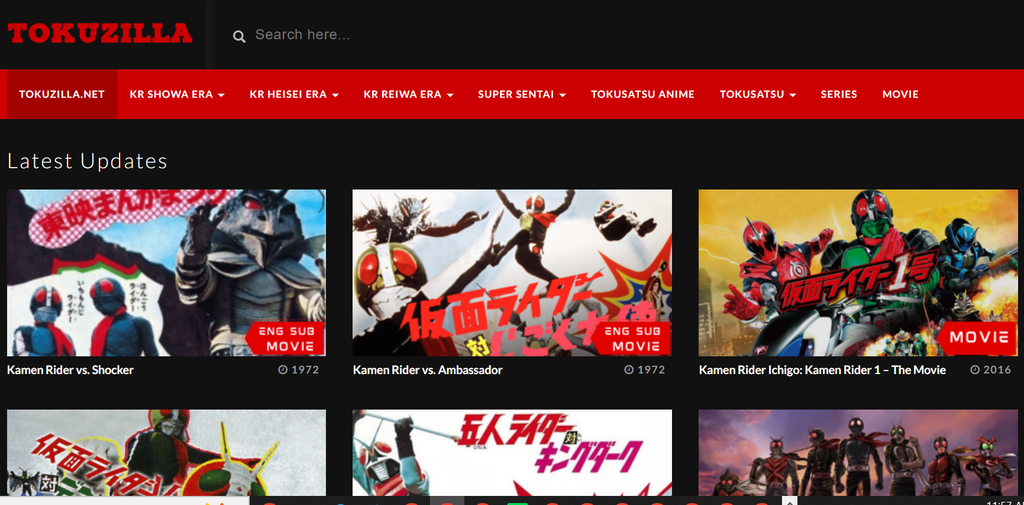
Tokuzilla is a website associated with online viewing of Japanese tokusatsu movies and television series, particularly productions that may be difficult for international audiences to locate. The name is commonly encountered by viewers searching for Japanese superhero, monster, science-fiction, and action content with English subtitles.
The word tokusatsu itself comes from the Japanese expression tokushu satsuei, meaning “special effects.” The term is used broadly for Japanese productions in which special-effects techniques play an important role. Over the decades, tokusatsu has developed into several recognizable subgenres, including superhero shows, kaiju movies, giant-robot stories, science fiction, and fantasy.
Tokuzilla’s appeal to international viewers is largely connected with the difficulty of finding certain Japanese productions outside Japan. A series may have been broadcast domestically but may not have received an English-language release in every country. Subtitled versions therefore have an important role for overseas fans who want to follow the original Japanese productions.
What Type of Content Is Associated With Tokuzilla?
Content associated with Tokuzilla commonly includes well-known categories of Japanese genre entertainment, such as:
- Kamen Rider — transforming superhero productions
- Super Sentai — team-based superhero series
- Ultraman — giant-hero and kaiju productions
- Godzilla and kaiju films — giant-monster entertainment
- Tokusatsu movies — feature-length Japanese special-effects productions
- Older and newer television series — productions spanning multiple generations
The diversity of these franchises is one reason tokusatsu appeals to different types of viewers. Someone interested in superhero stories may begin with Kamen Rider, while viewers interested in monsters and science fiction may prefer Ultraman or kaiju films.
Why Do Viewers Search for English-Subtitled Versions?
Japanese remains the original language of most Japanese tokusatsu productions. English subtitles allow viewers who do not understand Japanese to follow the dialogue without replacing the original audio.
This is particularly significant for older productions. Some classic tokusatsu series were produced decades ago, long before global streaming became commonplace. As a result, international fans may encounter titles that have limited availability in their local markets.
However, Tokuzilla-specific visitor numbers, subscriber figures, or viewing statistics should not be confused with statistics for tokusatsu as a whole. Reliable public data about Tokuzilla’s actual audience size is limited. Where official or independently verifiable statistics are unavailable, claims about the site’s traffic or popularity should be treated cautiously.
Tokuzilla and the Larger Tokusatsu Ecosystem
Tokuzilla is best understood within the much larger international tokusatsu community. Franchises such as Ultraman, Kamen Rider, and Super Sentai have established audiences well beyond Japan, while streaming platforms and international licensing have made Japanese entertainment increasingly accessible.
For example, Tsuburaya Productions’ corporate information has reported a global Ultraman fanbase exceeding 100 million people. That figure refers to the Ultraman franchise, not Tokuzilla, but it demonstrates the substantial international audience for Japanese special-effects entertainment.
3. Understanding the Tokusatsu Genre
The word tokusatsu is commonly used to describe Japanese entertainment that makes significant use of special-effects filmmaking. The genre is especially associated with superheroes, giant monsters (kaiju), science fiction, fantasy, giant robots, transformation sequences, miniature sets, costumes, pyrotechnics, and stunt performances.
Rather than referring to one single type of story, tokusatsu is a broad filmmaking tradition. A tokusatsu production can be a serious science-fiction movie, a monster film, a children’s superhero series, or an action-oriented television franchise.
Major Categories of Tokusatsu
Tokusatsu can be divided into several major categories:
1. Superhero Tokusatsu
Series such as Kamen Rider feature transforming heroes who use specialized suits, weapons, vehicles, and abilities to fight villains and monsters.
2. Super Sentai
Super Sentai productions generally feature teams of heroes with distinctive colors, costumes, weapons, vehicles, and giant combining robots. The format has become one of Japan’s most recognizable superhero television traditions.
3. Kaiju Entertainment
Kaiju literally refers to strange or monstrous creatures and is strongly associated with Japanese giant-monster cinema. Godzilla is the best-known example.
The original Godzilla was released in Japan on November 3, 1954. The official Godzilla franchise history states that the character has subsequently appeared in more than 30 films across seven decades.
4. Giant Heroes and Science Fiction
The Ultraman franchise combines giant-hero action with monsters and science-fiction stories. Its long-running history has helped make it one of Japan’s most internationally recognized tokusatsu properties.
Practical Effects Are a Major Part of the Tradition
One of the defining characteristics of traditional tokusatsu is its use of physical filmmaking techniques. Instead of depending entirely on computer-generated imagery, productions have historically used miniature buildings, mechanical effects, creature suits, physical props, pyrotechnics, and controlled sets.
The early Godzilla films provide a clear example. For Godzilla Raids Again (1955), Toho constructed a large miniature version of Osaka, including an Osaka Castle set, for the destruction sequences. The film’s special effects were overseen by Eiji Tsuburaya, one of the most influential figures in Japanese special-effects filmmaking.
How Tokusatsu Differs From Ordinary Special-Effects Films
Not every Japanese film containing special effects is necessarily described as tokusatsu. The term is more closely connected with productions in which special-effects work is an important part of the visual identity or storytelling.
This distinction helps explain why tokusatsu has developed such a recognizable fan culture. Viewers are often interested not only in the characters and stories but also in the filmmaking techniques used to create monsters, vehicles, miniature cities, transformations, and large-scale action.
A Genre That Has Continued to Evolve
Tokusatsu has changed considerably since the 1950s. Early productions relied heavily on practical effects and miniature photography, while contemporary productions increasingly combine practical techniques with digital visual effects.
The evolution can be seen particularly clearly in the Godzilla franchise. The official history covers Japanese productions from the 1954 Showa era through later Heisei and Millennium productions and into modern films such as Shin Godzilla (2016) and Godzilla Minus One (2023).
The result is a genre that connects classic filmmaking techniques with modern production technology. This combination is one reason tokusatsu continues to attract viewers who enjoy Japanese superheroes, monsters, science fiction, fantasy, and practical special effects.
4. History and Evolution of Japanese Tokusatsu
The history of Japanese tokusatsu stretches back more than seven decades, with its modern identity developing alongside the growth of Japan’s film and television industries. The genre became particularly influential after the success of giant-monster and science-fiction productions during the 1950s.
One of the most important milestones was Godzilla, released by Toho in Japan in 1954. The film introduced audiences to a giant creature created through a combination of suit performance, miniature sets, puppetry, mechanical effects, and cinematography. Its success established kaiju cinema as an important part of Japanese popular culture.
The 1960s brought another major development with the arrival of television superhero productions. Ultraman premiered in 1966, following Ultra Q earlier that year. The series helped establish the format of a giant hero battling monsters and other threats, while also demonstrating how tokusatsu techniques could be adapted to regular television production.
Another major milestone came with Kamen Rider, which premiered in 1971. Created by manga artist Shotaro Ishinomori, the franchise introduced the transforming superhero format that would become one of the most recognizable styles in Japanese television. The original series ran for 98 episodes, establishing a long-running franchise that has continued through numerous generations.
Super Sentai also became an important part of Japanese television history. The first series, Himitsu Sentai Gorenger, premiered in 1975 and ran for 84 episodes. Later Super Sentai productions developed the familiar team-based format involving color-coded heroes, specialized weapons, vehicles, and giant robots.
During the 1980s and 1990s, tokusatsu continued to experiment with new designs, production techniques, and storytelling approaches. Improvements in filmmaking technology allowed producers to combine traditional miniature work and suit acting with increasingly sophisticated optical and mechanical effects.
The genre experienced another period of international attention during the 1990s through the global popularity of Mighty Morphin Power Rangers. Although Power Rangers was produced as an American franchise, its action footage was largely adapted from Japanese Super Sentai productions. This introduced visual elements originating in Japanese tokusatsu to a much broader international television audience.
The 2000s and 2010s saw tokusatsu increasingly incorporate computer-generated imagery alongside traditional practical effects. Franchises such as Kamen Rider, Super Sentai, and Ultraman continued producing new television series, while Godzilla returned to both Japanese and international cinema.
In 2016, Shin Godzilla became a major Japanese theatrical release and earned more than ¥8 billion at the Japanese box office, according to Toho-related reporting. In 2023, Godzilla Minus One continued the franchise’s modern revival and became another major international success.
Tokusatsu has therefore evolved from the miniature-heavy productions of the 1950s into a modern filmmaking tradition that combines practical effects, costumes, stunt work, miniatures, mechanical effects, and computer-generated imagery.
For today’s viewers searching for tokusatsu online, this history means that the genre encompasses productions from several different technological and storytelling eras. A modern Kamen Rider episode, a classic Ultraman series, and a 1950s Godzilla film may look very different, but they all form part of the broader tokusatsu tradition.
5. What You Can Find on Tokuzilla
Tokuzilla is associated with a wide range of Japanese tokusatsu content, including major franchises such as Kamen Rider, Super Sentai, Ultraman, and Godzilla.
Kamen Rider
Kamen Rider is one of Japan’s longest-running superhero franchises. The original series premiered in 1971, and the franchise has continued through numerous television seasons, films, specials, and crossover productions.
The official Kamen Rider history records dozens of productions spanning the franchise’s different eras. This gives viewers the opportunity to explore everything from the original 1970s productions to contemporary series featuring modern costumes, digital effects, and more serialized storytelling.
Super Sentai
Super Sentai is another major part of Japanese tokusatsu. The franchise began with Himitsu Sentai Gorenger in 1975, which ran for 84 episodes.
Super Sentai typically follows teams of heroes who use specialized weapons, vehicles, costumes, and abilities. Giant robots and large-scale monster battles are also important elements of many seasons.
The franchise has particular importance for international audiences because Japanese Super Sentai footage was adapted for the American Power Rangers television franchise.
Ultraman
Ultraman is centered on giant heroes who defend Earth against monsters, aliens, and other threats. The first Ultraman television series premiered in 1966, establishing a format that has remained influential for generations.
Tsuburaya Fields Holdings has reported that the Ultraman franchise has more than 100 million fans worldwide. This figure represents the broader Ultraman audience and does not represent Tokuzilla’s visitor numbers or subscribers.
The franchise has also expanded internationally through television, movies, streaming releases, merchandise, and licensed products.
Godzilla and Kaiju
Godzilla is one of the most recognizable names in Japanese tokusatsu. The original Godzilla film was released in Japan on November 3, 1954.
The official Godzilla franchise describes the character as appearing in more than 30 films across seven decades. The wider kaiju genre includes many other giant creatures and monster-focused productions, making it a substantial part of Japanese science-fiction entertainment.
Movies and Special Productions
Tokusatsu content extends beyond regular television episodes. Major franchises have produced feature films, television specials, crossover movies, anniversary projects, and spin-offs.
For example, Kamen Rider has produced numerous theatrical films alongside its television seasons, while Godzilla has developed a large film catalog since 1954.
This variety means that viewers searching for tokusatsu online may encounter productions from very different periods. A 1960s television series can look dramatically different from a modern digital-effects production, even when both belong to the same broad genre.
English-Subtitled Content
For international viewers, English subtitles are particularly useful because most Japanese tokusatsu productions were originally created for Japanese-speaking audiences.
Subtitles allow viewers to retain the original Japanese audio while following conversations, character development, story details, and cultural references. This has helped tokusatsu reach audiences outside Japan, especially in countries where official dubbed versions are unavailable.
6. Tokuzilla and English-Subtitled Tokusatsu
English subtitles are one of the main ways international audiences experience Japanese tokusatsu in its original language.
Japanese tokusatsu is primarily produced for Japanese-speaking audiences, which can create a language barrier for viewers in other countries. English-subtitled releases help overcome that barrier while preserving the original Japanese dialogue and performances.
Why English Subtitles Matter
Subtitles do more than translate conversations. A good subtitle track also helps viewers understand:
- Character names and relationships
- Story developments
- Transformation calls and special attacks
- Japanese terminology
- Cultural references
- Humor and dramatic dialogue
- Important information contained in conversations
This is particularly relevant for long-running franchises such as Kamen Rider, Super Sentai, and Ultraman, where episodes can contain continuing storylines and recurring characters.
Subtitles Versus Dubbing
English subtitles and English dubbing provide different viewing experiences. With subtitles, viewers hear the original Japanese performances, including the actors’ voices, delivery, and emotional expression. Dubbing replaces the original dialogue with an English-language performance.
For fans interested in experiencing a production as originally performed, subtitles can therefore be an important option.
Tokusatsu and International Accessibility
The growth of digital distribution has made Japanese entertainment more accessible to international viewers than it was during the early decades of television. Streaming services, digital stores, official YouTube channels, and licensed international releases have all contributed to this change.
The international reach of Ultraman illustrates this development. Tsuburaya Fields Holdings has reported more than 100 million Ultraman fans worldwide and has highlighted the franchise’s expansion into overseas markets. The company has also reported approximately 20 million worldwide views for an Ultraman title on Netflix, with the production entering the platform’s Top 10 in 69 countries and regions.
These figures concern the Ultraman franchise rather than Tokuzilla itself, but they demonstrate the potential international audience for Japanese tokusatsu.
Finding English-Subtitled Releases
Viewers searching for a particular tokusatsu production should check the title’s current official distribution options. Depending on the franchise and country, an English-subtitled version may be available through a licensed streaming platform, digital purchase or rental service, physical media, or an official franchise channel.
Availability can vary because streaming and distribution rights are often territory-specific and may change when licensing agreements expire or new agreements are established.
For this reason, the presence of a title on a particular website should not automatically be interpreted as evidence that the website has authorization to distribute it.
The Role of Tokuzilla in Online Searches
Tokuzilla has become associated online with searches for tokusatsu series and movies with English subtitles. This reflects a broader demand among international fans for easier access to Japanese genre entertainment.
However, publicly available information does not provide reliable, independently verified statistics for Tokuzilla’s total number of users, subscribers, or streams. Such figures should therefore not be presented as established facts.
7. Why International Fans Watch Tokusatsu
Tokusatsu has developed an international following because it combines distinctive characters, practical effects, imaginative stories, and long-running franchises.
For viewers outside Japan, tokusatsu offers a different approach to superhero and science-fiction entertainment. Instead of focusing exclusively on conventional superheroes, the genre incorporates giant monsters, transforming heroes, mysterious creatures, futuristic technology, giant robots, and team-based characters.
Unique Visual Style
One of the most recognizable features of tokusatsu is its visual style. Traditional productions frequently used costumes, miniature environments, mechanical props, stunt performers, pyrotechnics, and practical creature effects.
These techniques remain an important part of the genre’s identity even as modern productions increasingly incorporate computer-generated imagery.
For some international viewers, this combination of practical and digital effects provides a viewing experience that is noticeably different from mainstream Hollywood superhero productions.
Long-Running Franchises
Another reason for tokusatsu’s international appeal is the depth of its major franchises.
Kamen Rider began in 1971, Super Sentai began in 1975, and Ultraman began in 1966. Each franchise has produced numerous seasons and films over several decades.
This creates a large library for viewers to explore. Someone who enjoys one season can move backward into older productions or forward into newer installments.
Characters and Transformation Sequences
Transformation sequences are another recognizable feature of Japanese superhero tokusatsu.
A character may begin an episode as an ordinary person and then transform into a specialized hero using a device, belt, weapon, or other technology. The transformation often becomes an important part of the character’s identity and is frequently accompanied by distinctive sounds, music, and visual effects.
For international fans, these recurring elements can make different seasons immediately recognizable while still allowing each new production to introduce its own characters and concepts.
Monster and Science-Fiction Stories
Tokusatsu also appeals to viewers who enjoy kaiju and science fiction.
Godzilla established one of the most influential giant-monster traditions in cinema with its 1954 debut. Ultraman expanded the concept through television by combining giant-hero battles with monsters, aliens, and science-fiction storylines.
This variety means that tokusatsu is not limited to one audience. Some viewers may primarily enjoy superhero stories, while others may be interested in creature design, special effects, science fiction, or Japanese popular culture.
International Distribution
The international growth of Japanese entertainment has also made tokusatsu easier to discover.
Streaming platforms and digital distribution have reduced some of the geographic barriers that previously limited access to Japanese television and film. Official international releases can now provide subtitles, localized descriptions, and simultaneous or near-simultaneous access in multiple markets.
The international reach of Ultraman provides one measurable example. Tsuburaya Fields Holdings has reported a global fanbase of more than 100 million people for the franchise. It has also reported approximately 20 million worldwide views for an Ultraman title on Netflix, which reached the Top 10 in 69 countries and regions.
These statistics relate to Ultraman rather than Tokuzilla, but they demonstrate the scale of international interest in Japanese tokusatsu.
Online Fan Communities
Online communities have further contributed to tokusatsu’s international visibility. Fans discuss episodes, recommend seasons, explain Japanese terminology, collect merchandise, and share information about new releases.
English-language communities are particularly useful for viewers who are discovering franchises for the first time. They can provide context about different eras, characters, continuity, and the differences between Japanese productions and international adaptations.
Discovering Older Productions
Digital communities and online databases have also made it easier to learn about older tokusatsu productions.
A viewer interested in a modern series can discover earlier versions of the same franchise and compare how costumes, storytelling, special effects, and production technology have changed over time.
This historical depth is one of tokusatsu’s distinctive characteristics. A franchise can provide material spanning multiple generations, allowing viewers to see how Japanese television and filmmaking evolved alongside the genre.
8. Tokusatsu’s Global Audience: Facts and Statistics
The international audience for Japanese entertainment has expanded significantly, creating a larger global environment for tokusatsu franchises.
Measuring the worldwide audience for tokusatsu specifically can be difficult because there is no single public database covering every television series, movie, streaming platform, and country. However, statistics from major Japanese entertainment companies and audience-research firms provide useful evidence of the genre’s international reach.
Ultraman’s Worldwide Fanbase
One of the clearest examples is Ultraman. Tsuburaya Fields Holdings, the company behind the franchise, reported that Ultraman had a global fanbase of more than 100 million people. The company describes the franchise as having developed into a global intellectual property nearly 60 years after its creation.
The company’s reported regional figures also show substantial audiences outside Japan. Its current corporate information cites approximately 100 million fans in China, 50 million in Southeast Asia, and 4 million in Japan. These figures are company-reported estimates and should not be treated as independently measured Tokuzilla traffic.
Ultraman: Rising and International Distribution
The international distribution of Ultraman: Rising provides another measurable example. Tsuburaya Fields Holdings reported that the Netflix release was available in 190 countries and regions. The company also reported that the film reached No. 2 globally during its release week and entered the weekly Top 10 in 69 countries and regions.
The figures demonstrate how a Japanese tokusatsu property can reach audiences far beyond its domestic market when supported by a major international distribution platform.
Japanese Content Is Increasingly Global
Tokusatsu also benefits from the wider international growth of Japanese entertainment.
In June 2026, Parrot Analytics reported that Japanese content accounted for almost 29% of global demand for non-English-language content between 2020 and 2025. This figure covers Japanese content broadly rather than tokusatsu alone, so it should not be interpreted as a measurement of tokusatsu’s individual market share.
The same analysis found that live-action productions adapted from Japanese properties connected to the anime ecosystem increased their share of global audience demand from 0.09% in 2020 to 0.26% in 2025. The number of titles in that category also increased from 73 to 395 during the same period.
Why These Numbers Matter for Tokusatsu
These statistics do not establish how many people use Tokuzilla, nor do they measure the website’s individual audience. Instead, they provide broader context for the international environment in which tokusatsu is now being distributed and discovered.
The figures show three important developments: Japanese entertainment has a substantial international audience, major Japanese franchises can achieve distribution across dozens or even hundreds of markets, and streaming platforms have made it easier for viewers outside Japan to encounter Japanese-language productions.
For tokusatsu fans, this broader internationalization means that franchises such as Ultraman, Kamen Rider, Godzilla, and Super Sentai have greater opportunities to reach viewers outside Japan through licensed streaming, films, merchandise, television broadcasts, and digital platforms.
9. Ultraman’s International Reach
Ultraman is one of the clearest examples of a Japanese tokusatsu franchise developing a large audience beyond Japan.
The history of Ultraman began in 1966, when the original Ultraman television series premiered in Japan. Created by Tsuburaya Productions, the series followed a giant extraterrestrial hero who protected Earth from monsters and other threats. Its combination of science fiction, monster battles, practical effects, and human drama established a format that would be developed through many later productions.
Over the following decades, the Ultraman brand expanded through television series, feature films, merchandise, video games, comics, live events, and international licensing. This expansion transformed Ultraman from a Japanese television character into a global entertainment property.
A Franchise With a Large International Audience
Tsuburaya Fields Holdings has reported that the Ultraman franchise has more than 100 million fans worldwide. The company’s published information includes significant audiences in markets outside Japan, particularly China and Southeast Asia. These figures are company-reported estimates and refer to the overall Ultraman franchise rather than any individual streaming website.
The company has reported approximately 100 million fans in China, 50 million in Southeast Asia, and 4 million in Japan. Because these figures are reported by the rights-holder’s corporate materials, they should be understood as estimates rather than a standardized independent audience measurement.
Ultraman on Global Streaming Platforms on Tokuzilla
Streaming has created new opportunities for tokusatsu franchises to reach audiences outside their original markets.
A notable example is Ultraman: Rising, a feature-length animated film released internationally through Netflix in 2024. Tsuburaya Fields Holdings reported that the film was distributed across 190 countries and regions.
The company also reported that Ultraman: Rising reached No. 2 globally during its release week on Netflix and appeared in the platform’s Top 10 in 69 countries and regions.
These figures demonstrate the potential reach of a Japanese tokusatsu property when it receives worldwide distribution through a major streaming platform.
From Japanese Television to Global Entertainment on Tokuzilla
Ultraman’s international development also illustrates how tokusatsu has changed as a form of entertainment.
The original 1966 series was primarily a Japanese television production using the practical-effects techniques available at the time. Modern Ultraman productions can combine suit performances, miniature work, physical sets, mechanical effects, digital compositing, and computer-generated imagery.
The storytelling has evolved as well. While monster battles remain central to the franchise, newer productions can incorporate longer character arcs, contemporary science-fiction themes, family relationships, and stories designed to appeal to viewers across different age groups.
International Availability
For overseas fans, international distribution can make a major difference in discovering Ultraman. Official releases may provide subtitles, dubbed dialogue, localized marketing, or simultaneous availability across multiple markets.
This is particularly relevant to viewers searching for English-subtitled tokusatsu online. Rather than relying solely on a single website, fans can check official distributors and streaming services for the current availability of specific Ultraman series and films.
10. The Global Growth of Japanese Entertainment
The international growth of Japanese entertainment has created new opportunities for tokusatsu franchises to reach viewers outside Japan.
Japanese entertainment has increasingly become part of the global media market. Anime, manga, video games, films, television dramas, and tokusatsu properties are now distributed across a much wider range of countries than in previous decades.
Streaming has been particularly important in this development. Digital platforms can distribute Japanese productions internationally without requiring viewers to rely exclusively on local television broadcasters or physical media.
Growing International Demand on Tokuzilla
Audience research provides measurable evidence of this broader trend. Parrot Analytics reported that Japanese content represented almost 29% of global demand for non-English-language content between 2020 and 2025. This statistic covers Japanese content as a whole rather than tokusatsu specifically, so it should not be interpreted as tokusatsu’s individual share of global demand.
The same analysis found substantial growth in live-action productions based on Japanese intellectual properties connected to the anime ecosystem. According to the report, the number of such titles increased from 73 in 2020 to 395 in 2025, while their share of global audience demand increased from 0.09% to 0.26%.
Although these statistics are broader than tokusatsu, they illustrate the increasing international interest in Japanese-origin entertainment.
Streaming Changes How Audiences Discover Japanese Shows
Before the expansion of online streaming, international viewers often depended on television broadcasts, imported DVDs, fan-subtitled releases, or specialist retailers to discover Japanese productions.
Streaming has changed that process. A viewer can now search for a Japanese series or movie by title and potentially find an official release with English subtitles or dubbing, depending on the country and licensing agreement.
This has also made it easier for audiences to discover older franchises. A viewer who encounters a modern Kamen Rider, Ultraman, or Godzilla production may subsequently explore earlier entries in the franchise.
The Importance of Global Licensing on Tokuzilla
International availability depends heavily on licensing agreements. A Japanese production may be available in one country but unavailable in another because different companies hold distribution rights in different territories.
This means that the same series can have very different levels of accessibility depending on where a viewer lives. Streaming catalogs can also change when licensing agreements begin, expire, or move between platforms.
For this reason, the presence or absence of a title on one website does not necessarily indicate its overall international availability.
Tokusatsu Within the Broader Japanese Media Market
Tokusatsu represents only one part of Japan’s international entertainment industry, but major franchises demonstrate how successfully Japanese properties can cross cultural and geographic boundaries.
Godzilla, for example, has developed from a Japanese monster film released in 1954 into a global franchise with Japanese and international productions. Ultraman has similarly expanded from a 1966 television series into an internationally distributed multimedia property.
Kamen Rider and Super Sentai have also established long-running audiences, while the adaptation of Super Sentai footage into Power Rangers introduced elements of Japanese tokusatsu to generations of viewers around the world.
What This Means for International Fans on Tokuzilla
For international tokusatsu viewers, the growth of Japanese entertainment means there are now more ways to discover and follow Japanese productions than there were several decades ago.
English subtitles remain particularly important because they allow viewers to experience Japanese-language productions without requiring fluency in Japanese. At the same time, official international releases provide a way for audiences to support the creators, studios, and rights holders responsible for producing the content.
11. Tokuzilla Website Features and User Experience
Tokuzilla has been associated with a simple online catalog focused on Japanese tokusatsu movies and television series, particularly productions available with English subtitles.
For viewers searching for tokusatsu online, website organization can be an important part of the viewing experience. A large catalog can become difficult to navigate if titles are not separated by franchise, release year, genre, or other useful categories.
Tokuzilla has historically been presented as a site focused on tokusatsu streaming, with its online description referencing Japanese productions and English-subtitled content. Third-party domain information indicates that the Tokuzilla.net domain was registered in August 2020, although domain registration alone does not establish when the website began operating or how many people have used it.
Tokusatsu-Focused Catalog
Unlike general entertainment websites that cover thousands of unrelated movies and television programs, Tokuzilla’s identity has been centered on tokusatsu.
This focus can make the site relevant to viewers specifically searching for franchises such as:
- Kamen Rider
- Super Sentai
- Ultraman
- Godzilla
- Power Rangers
- Other Japanese superhero and special-effects productions
A focused catalog can also make it easier for fans to move between related titles and explore different eras of a franchise.
Search and Discovery
When a streaming catalog contains many seasons and movies, search functionality becomes especially useful. Tokusatsu franchises can have decades of releases, and the same character or franchise may appear in television series, movies, specials, and crossover productions.
For example, Kamen Rider has been producing television and movie content since the early 1970s, while Godzilla’s film history extends back to 1954. A viewer searching for a particular production therefore needs to distinguish between titles with similar names, different seasons, and multiple versions.
English-Subtitle Availability on Tokuzilla
English subtitles are an important consideration for international tokusatsu audiences.
A subtitle track can make Japanese-language productions accessible to viewers who cannot understand Japanese while retaining the original Japanese audio. However, subtitle quality and availability can vary between releases.
Viewers should also distinguish between officially licensed subtitles and subtitles distributed without authorization. The availability of English subtitles on a website does not by itself establish that the underlying video or subtitle track has been legally licensed.
Website Accessibility Can Change
Online streaming websites can change domains, catalogs, layouts, or availability over time. A site that appears accessible at one point may later become unavailable, while individual titles may disappear because of copyright claims, licensing changes, or technical issues.
This is especially relevant to unofficial streaming platforms. Publicly available information does not provide a reliable, independently verified figure for Tokuzilla’s current number of users, monthly visitors, or total streams. Claims about those figures should therefore be treated cautiously unless supported by a credible measurement source.
User Experience and Safety on Tokuzilla
When visiting any unfamiliar streaming website, users should pay attention to basic online safety. Excessive redirects, unexpected browser notifications, suspicious download prompts, and requests to install unknown software are warning signs.
A legitimate streaming experience generally should not require users to install unidentified programs or browser extensions simply to play a video.
12. How to Find Tokusatsu Series Online
Finding a particular tokusatsu series is usually easier when viewers search by franchise, title, release year, and subtitle availability rather than relying on a single streaming website.
Tokusatsu has accumulated thousands of episodes and films across different franchises and decades. As a result, a title search can sometimes produce multiple versions, remakes, specials, movies, or similarly named productions.
Search by Franchise
A practical starting point is to identify the franchise first. Popular examples include Kamen Rider, Super Sentai, Ultraman, and Godzilla.
Once the franchise is identified, viewers can narrow the search to a particular season, movie, or character. This is particularly useful for long-running properties in which different productions share related names.
Search by Exact Title
Using the exact Japanese or internationally recognized title can reduce confusion. Adding the release year can be even more helpful.
For example, instead of searching only for “Ultraman,” a viewer can search for the specific series or movie title together with its release year. This helps distinguish the original 1966 Ultraman television series from later productions.
The same approach works with Kamen Rider and Super Sentai, where multiple productions have been released over several decades.
Check English-Subtitle Availability on Tokuzilla
International viewers should check whether the particular release includes English subtitles before starting a series.
Subtitle availability can differ between countries and platforms because international licensing agreements are often territory-specific. A title may have Japanese audio and English subtitles on one service but only Japanese-language availability on another.
Look for Official Distribution on Tokuzilla
When a series or movie is available through an authorized distributor, that option is generally preferable for viewers who want a reliable source.
Official distribution can include:
- Licensed streaming platforms
- Digital rental or purchase services
- Official franchise channels
- Television broadcasts
- Licensed Blu-ray and DVD releases
- Official movie releases
The availability of these options varies by country and can change over time.
Check Release Information
Release dates can help viewers identify the correct production. This is especially important with franchises that contain remakes, anniversary productions, crossover movies, and spin-offs.
For example, Godzilla began with the 1954 Japanese film, but the character has since appeared in numerous Japanese and international productions. Searching by year can therefore prevent viewers from accidentally selecting a different version.
Be Careful With Unofficial Streaming Sites on Tokuzilla
Websites offering free access to copyrighted movies or television series may not necessarily have authorization to distribute those productions.
Viewers should be cautious with sites that display aggressive advertisements, repeatedly redirect visitors, request suspicious downloads, or ask users to install unknown browser extensions.
If an official source is available, it can also provide greater certainty regarding subtitle quality, video quality, availability, and licensing.
Availability Changes Over Time on Tokuzilla
Online catalogs are not permanent. A series can be added to a streaming service and later removed when a licensing agreement expires or changes.
This is particularly relevant to tokusatsu because many franchises involve different rights holders, distributors, and international licensing arrangements.
13. English Subtitles: Why They Matter to International Viewers
English subtitles make Japanese tokusatsu more accessible to international viewers while allowing them to experience the original Japanese performances.
Most tokusatsu productions are originally created in Japanese. For viewers who do not speak the language, subtitles provide an important way to understand the dialogue, story, character relationships, and cultural details without replacing the original audio.
Preserving the Original Performance on Tokuzilla
One advantage of subtitles is that viewers can hear the actors’ original voices. Their tone, delivery, timing, and emotional expression remain intact while the translated text provides the meaning in English.
This can be particularly valuable in tokusatsu because performances are an important part of the genre. Transformation scenes, battles, dramatic confrontations, and character interactions often depend on vocal delivery and timing.
Understanding Long Storylines on Tokuzilla
Modern tokusatsu frequently includes continuing storylines rather than completely independent episodes. Characters can develop across an entire season, while events from earlier episodes may become important later.
Accurate subtitles therefore matter beyond simple dialogue translation. They help viewers understand:
- Character motivations
- Relationships between characters
- Villain objectives
- Important plot developments
- Technical or fictional terminology
- References to previous episodes
- Transformation and attack commands
A poorly translated subtitle can make these elements difficult to understand, particularly when a series contains specialized Japanese terminology.
Subtitles and Cultural Context on Tokuzilla
Japanese tokusatsu can also contain cultural references that may not have an obvious English equivalent.
Names, honorifics, expressions, wordplay, locations, organizations, and traditional concepts can require additional context. Different subtitle translators may handle these elements differently, which can result in variations between releases.
For international viewers, subtitles can therefore serve as both a translation tool and an introduction to aspects of Japanese language and culture.
Subtitles Versus English Dubbing
English subtitles and dubbing provide different viewing experiences.
With subtitles, the original Japanese dialogue remains unchanged, while the translation appears as text. Dubbing instead replaces the original spoken dialogue with an English-language voice performance.
Neither approach is inherently required for every viewer. Some audiences prefer subtitles because they want the original performances, while others prefer dubbing because they can concentrate entirely on the visuals.
Why Subtitle Availability Varies on Tokuzilla
English subtitles are not automatically available for every Japanese production. Distribution rights, localization agreements, age of the production, and the intended market can all affect whether an official English-language release exists.
Older tokusatsu productions can sometimes be particularly difficult to locate through mainstream international services. Newer productions may have wider availability when they receive international licensing agreements.
The Growth of International Access on Tokuzilla
The expansion of streaming and digital distribution has made subtitled Japanese entertainment considerably easier to access than in earlier decades.
Major platforms can release Japanese productions across multiple countries simultaneously, while official websites and licensed distributors can provide additional international options.
The international performance of Ultraman: Rising illustrates the potential scale of this distribution model. Tsuburaya Fields Holdings reported that the film was released through Netflix in 190 countries and regions and entered the platform’s Top 10 in 69 countries and regions.
These figures concern one Ultraman production rather than tokusatsu as a whole, but they demonstrate how subtitles and international digital distribution can connect Japanese genre entertainment with viewers around the world.
Choosing a Subtitled Release on Tokuzilla
When looking for a tokusatsu series with English subtitles, viewers should consider the source as well as the translation. An authorized release can provide greater confidence about the legality of the distribution and the consistency of the subtitle track.
14. Tokuzilla vs. Official Streaming Options
The main difference between a tokusatsu-focused website and an official streaming service is not simply the catalog size, but the source of the content and the licensing behind its distribution.
Fans searching for Kamen Rider, Super Sentai, Ultraman, Godzilla, and other Japanese productions may encounter several types of online sources. These can include official streaming platforms, franchise-owned channels, digital stores, physical-media distributors, and third-party websites such as Tokuzilla.
Understanding the differences can help viewers make informed choices about where to watch a particular production.
Official Streaming Services
Official streaming platforms obtain distribution rights from studios, production companies, or other rights holders. Depending on the agreement, they may offer Japanese audio together with English subtitles, dubbed versions, or both.
The main advantage is that viewers can generally verify that the platform has permission to distribute the title in the relevant territory.
However, official catalogs can vary considerably by country. A Kamen Rider or Ultraman production available in one market may not appear in another because streaming rights are often negotiated separately for different territories.
Tokuzilla and Other Third-Party Websites
Tokuzilla has been associated with online access to tokusatsu movies and television series, including English-subtitled productions.
Unlike an official streaming service, however, the presence of a title on a third-party website does not by itself demonstrate that the site holds distribution rights for that title.
This distinction is important when discussing online streaming. Availability and authorization are separate questions. A production can be accessible online without the website necessarily being its licensed distributor.
Catalog Accessibility on Tokuzilla
A tokusatsu-focused website may appeal to fans because its catalog is centered on a particular type of entertainment. Instead of searching through a general entertainment library, users may encounter multiple productions from related franchises in one place.
Official services can provide a different experience. Their catalogs may be smaller for a particular franchise, but the available titles generally come with information about the platform, licensing arrangement, subtitle options, and supported regions.
Video and Subtitle Quality
Another difference can involve the quality and consistency of the viewing experience.
Official distributors generally have greater control over:
- Video resolution
- Audio quality
- Subtitle synchronization
- Translation quality
- Episode ordering
- Metadata and descriptions
- Playback reliability
Third-party sites can vary considerably in these areas. A subtitle track may also originate from a different source, making translation quality difficult to evaluate without watching the release.
Availability and Licensing on Tokuzilla
Licensing is one of the most important considerations when comparing streaming sources.
A Japanese production may have separate rights for Japan, North America, Europe, South Asia, and other territories. These agreements can change over time.
For this reason, viewers should not assume that a title’s availability on a particular website means it is permanently available or officially licensed there.
Cost
Another consideration is pricing.
Official streaming services commonly use subscription, rental, purchase, or advertising-supported models. Third-party websites may advertise free access, although the absence of a subscription fee does not establish that the underlying content is legally distributed.
For viewers who want to support the creators and rights holders, licensed services and officially released physical or digital products provide a clearer route.
Which Option Fits a Viewer on Tokuzilla
There is no single viewing method that works for every country or every tokusatsu title. Availability depends on the specific production, location, language options, and current licensing agreements.
15. Licensing, Copyright, and Streaming Considerations
The availability of a movie or television series online does not necessarily mean that the website distributing it has the legal rights to do so.
Tokusatsu franchises can involve complicated international distribution arrangements. A production may have one company responsible for its original Japanese release and different companies handling television, streaming, theatrical, or physical-media distribution in other countries.
What Is a Streaming License?
A streaming license is an agreement that gives a service permission to make particular content available to viewers under specified conditions.
Licenses can define:
- Which country or region can access the content
- How long the content can remain available
- Whether subtitles or dubbing are permitted
- Which distribution platforms can show the production
- Whether the content can be downloaded
- Whether the rights are exclusive or non-exclusive
As a result, a series can legally appear on one streaming platform in one country while being unavailable on that same platform in another country.
Why Availability Changes on Tokuzilla
Streaming catalogs are constantly changing. When a licensing agreement expires, a service may remove a title. Conversely, a new agreement can make a previously unavailable production accessible.
This is particularly relevant for long-running tokusatsu franchises because individual seasons, movies, and specials can have different distribution arrangements.
For example, Kamen Rider has produced numerous television series and films since its debut in 1971, while Godzilla has a film history beginning in 1954. Rights to individual productions can therefore involve different agreements rather than one universal license covering an entire franchise.
Copyright and Online Streaming on Tokuzilla
Copyright generally gives rights holders control over how their creative works are reproduced, distributed, and made available to the public, subject to the laws applicable in a particular jurisdiction.
For viewers, this means that finding a copyrighted tokusatsu episode or movie on a website is not sufficient evidence that the website is authorized to distribute it.
Tokuzilla and similar third-party streaming websites should therefore be considered separately from the franchises and productions they list. A website’s catalog does not establish ownership of the underlying movies or television programs.
English Subtitles and Copyright on Tokuzilla
Subtitles can also involve intellectual-property rights. An official distributor may commission or license an English translation as part of its international release.
Consequently, viewers should distinguish between an officially localized release and a subtitle track uploaded or distributed independently.
This is especially important for older tokusatsu productions, where fans may encounter multiple subtitle versions with different translations.
Regional Licensing on Tokuzilla
International viewers may notice that a tokusatsu title is available in one country but not another. This does not necessarily mean that the production is unavailable globally.
Distribution rights are often divided geographically. A company may have permission to stream a particular series in North America while another distributor controls rights in a different market.
For viewers in countries where an official release is unavailable, checking the rights holder’s website, authorized streaming platforms, and licensed digital stores can help establish whether another legitimate option exists.
Supporting the Tokusatsu Industry on Tokuzilla
Watching through authorized distribution channels provides a direct commercial route for licensing partners, distributors, studios, and other rights holders involved in bringing Japanese productions to international audiences.
Revenue from legitimate releases can also contribute to the continued development of television series, movies, merchandise, localization, and international distribution.
What Viewers Should Check on Tokuzilla
Before watching a tokusatsu production online, viewers can check:
- Who owns the production or franchise?
- Is the website an authorized distributor?
- Is the title officially available in the viewer’s country?
- Are English subtitles officially provided?
- Are the streaming and download options clearly described?
16. Safety Considerations When Using Unofficial Streaming Websites
Online streaming websites can vary significantly in security, advertising practices, and reliability, so viewers should take basic precautions when visiting unfamiliar platforms.
People searching for free movies and television series may encounter websites that contain aggressive advertisements, redirects, pop-ups, or links that lead away from the original page. These issues are not unique to tokusatsu websites and can occur across many types of unauthorized streaming platforms.
Avoid Suspicious Downloads on Tokuzilla
A video-streaming website should not normally require viewers to install unknown software simply to play a video.
Users should be cautious if a website asks them to download:
- Unknown video players
- Browser extensions
- Executable programs
- Suspicious mobile applications
- Unfamiliar files claiming to be subtitles or codecs
Installing software from an unverified source can expose a device to security risks.
Be Careful With Pop-Ups and Redirects on Tokuzilla
Some streaming websites use advertising networks that can generate multiple pop-ups or redirect users to other webpages.
Viewers should avoid clicking unexpected advertisements, especially when a page suddenly claims that a device is infected or that the user has won a prize.
Legitimate security warnings normally come from the device’s operating system, browser, or recognized security software rather than from a random streaming webpage.
Protect Personal Information
Users should avoid entering unnecessary personal information on unfamiliar streaming websites.
In particular, viewers should be cautious about requests for:
- Passwords
- Credit-card information
- Banking details
- Government identification numbers
- Unnecessary personal information
A website offering a free video should not need sensitive financial or identity information merely to play ordinary content.
Use Strong Account Security on Tokuzilla
If an online service requires an account, users should avoid reusing the password they use for important services such as email or banking.
Using a unique password for each service reduces the potential impact if one account is compromised. Where available, two-factor authentication can provide an additional layer of protection.
Keep Devices and Browsers Updated
Security updates can address vulnerabilities in operating systems, web browsers, and other software.
Keeping a device’s operating system, browser, and security tools updated is therefore a basic precaution when browsing any unfamiliar website.
Check the Website Address Carefully
Users should also verify the domain name before entering information or downloading anything.
A familiar website name can sometimes be copied by unrelated domains. Small differences in spelling, unusual domain extensions, or unexpected redirects can indicate that a webpage is not the site a user intended to visit.
Official Sources Reduce Some Risks
Licensed streaming platforms generally provide a more controlled viewing environment than unknown third-party websites. They can also offer clearer information about the content provider, subtitles, pricing, and account security.
This does not mean that every official platform is completely risk-free, but established services generally provide users with more information about who operates the service and how the content is distributed.
Tokuzilla and Online Safety
Because publicly available information about third-party streaming websites can change quickly, viewers should evaluate the current website rather than relying solely on old reviews or historical descriptions.
Users searching for content associated with Tokuzilla should be particularly careful with domains claiming to be affiliated with the service, as similarly named websites can appear online over time.
17. Popular Tokusatsu Franchises to Explore
Japanese tokusatsu includes several major franchises, each with its own characters, storytelling style, visual identity, and history.
For someone discovering the genre through English-subtitled releases, starting with a well-established franchise can make it easier to understand the different styles of tokusatsu.
Kamen Rider
Kamen Rider began in 1971 and has developed into one of Japan’s most recognizable transforming-superhero franchises.
The central concept typically involves a hero who transforms into a powerful armored form and uses specialized equipment, vehicles, weapons, or abilities to confront enemies.
Different seasons introduce their own characters and concepts, so viewers can explore multiple eras without necessarily having to watch the entire franchise from the beginning.
Super Sentai
Super Sentai began in 1975 with Himitsu Sentai Gorenger.
The franchise generally follows a team of heroes who work together against recurring threats. Color-coded costumes, specialized weapons, vehicles, combination sequences, and giant robots are among its most recognizable features.
Super Sentai is also historically important outside Japan because footage from its productions was adapted for the Power Rangers franchise.
Ultraman
Ultraman debuted on Japanese television in 1966 and became one of the defining giant-hero franchises in tokusatsu.
The basic format commonly involves a giant hero battling monsters and extraterrestrial threats while human characters deal with related problems on the ground.
The franchise has continued across numerous television series, movies, specials, and other media. Tsuburaya Fields Holdings has reported an estimated global Ultraman fanbase of more than 100 million, demonstrating the scale of the franchise’s international audience.
Godzilla
Godzilla began with the 1954 Japanese film and became one of the world’s most recognizable giant-monster characters.
Unlike many television superhero franchises, Godzilla is particularly associated with theatrical cinema. The series has explored themes including science fiction, disaster, environmental concerns, military conflict, and human responses to giant creatures.
According to official franchise information, Godzilla has appeared in more than 30 films across seven decades.
Power Rangers
Although Power Rangers is an American franchise rather than a Japanese tokusatsu series, its relationship with Super Sentai makes it relevant to international tokusatsu audiences.
The first Mighty Morphin Power Rangers episode aired in the United States in 1993. The production used action footage from the Japanese Super Sentai series Kyoryu Sentai Zyuranger, while creating new American scenes and storylines around that footage.
This adaptation helped introduce visual elements of Japanese tokusatsu to a large international television audience.
Other Tokusatsu Productions
The genre extends beyond these major names. Japan has produced many superhero, science-fiction, fantasy, kaiju, and special-effects series and movies that do not belong to the largest franchises.
Some productions focus heavily on monsters, while others emphasize superheroes, robots, horror, historical fantasy, or science fiction.
This diversity means that viewers who enjoy one franchise can often find another production with a different tone or visual approach.
Choosing a Starting Point
A viewer’s preferred type of story can help determine where to begin:
- Transforming superheroes: Kamen Rider
- Team-based heroes: Super Sentai
- Giant heroes and monsters: Ultraman
- Giant-monster cinema: Godzilla
- Japanese-inspired superhero adaptation: Power Rangers
For international viewers, English-subtitled availability should also be considered. Not every season or movie has the same distribution rights, and availability can vary by country and streaming platform.
18. Classic vs. Modern Tokusatsu
Classic and modern tokusatsu share many of the same ideas, but advances in filmmaking technology have significantly changed how contemporary productions are made.
Tokusatsu has evolved continuously since the middle of the 20th century. Comparing older and newer productions reveals changes in special effects, cinematography, storytelling, costumes, sound design, and production technology.
Classic Tokusatsu
Classic tokusatsu productions relied heavily on practical effects.
Filmmakers frequently created miniature buildings, vehicles, landscapes, and other environments and then photographed them to simulate large-scale destruction or battles. Monster characters were commonly portrayed using costumes, puppets, mechanical models, or performers operating inside large creature suits.
The original Godzilla, released in 1954, is a well-known example of this approach. The production used miniature sets and a performer inside a Godzilla suit to create the appearance of a giant creature moving through Japanese cities.
Television productions such as the original Ultraman series from 1966 also relied extensively on practical techniques because the digital visual-effects technology used by contemporary productions did not exist.
Modern Tokusatsu
Modern tokusatsu continues to use practical effects but increasingly combines them with computer-generated imagery (CGI), digital compositing, motion graphics, and computer-assisted production techniques.
Contemporary productions can create environments and creatures that would have been extremely difficult or expensive to reproduce using miniatures alone.
This does not mean practical effects have disappeared. Costumes, physical props, stunt work, explosions, miniature elements, and real sets continue to appear in many modern productions.
Instead, modern tokusatsu often combines physical and digital techniques within the same sequence.
Changes in Storytelling
Storytelling has also changed over the decades.
Older television tokusatsu frequently used relatively self-contained episodes, although serialized stories certainly existed. Modern productions often use longer story arcs, recurring mysteries, character development, and interconnected episodes.
This can make contemporary series feel closer to other serialized television dramas while retaining familiar tokusatsu elements such as transformations, monsters, heroes, and action sequences.
Costume and Character Design
Character costumes have also evolved.
Classic superhero suits often had comparatively simple designs that could be produced using the materials and manufacturing techniques available at the time. Modern suits can feature more intricate armor, lighting elements, mechanical details, specialized textures, and elaborate transformation systems.
Despite these differences, the fundamental concept remains recognizable: a distinctive costume visually communicates the hero’s identity and abilities.
Sound and Music
Music and sound design have similarly developed.
Older productions often depended on orchestral recordings, practical sound effects, and recurring musical themes. Modern series can use sophisticated digital audio production, electronic music, extensive sound libraries, and more complex mixing techniques.
Music remains important to tokusatsu because transformation sequences, battles, opening themes, and climactic scenes often use distinctive musical cues.
Godzilla as an Example of Evolution
The Godzilla franchise provides a particularly clear example of technological change.
The 1954 Godzilla relied heavily on suit performance and miniature photography. Decades later, productions such as Shin Godzilla (2016) combined physical production techniques with modern digital visual effects.
Godzilla Minus One (2023) demonstrated another contemporary approach, combining practical filmmaking with digital effects to portray Godzilla and large-scale destruction.
The basic concept of a giant creature interacting with the human world has remained recognizable, but the tools used to present that concept have changed dramatically.
Why Fans Explore Both Eras
Classic and modern productions offer different viewing experiences.
Older tokusatsu can provide insight into the history of Japanese filmmaking and the creativity required to produce convincing effects with limited technology. Modern productions can offer more detailed visuals, sophisticated effects, and longer-form storytelling.
For international viewers discovering tokusatsu through English-subtitled releases, watching productions from different decades can therefore provide a useful perspective on how the genre has developed.
19. Frequently Asked Questions About Tokuzilla
What is Tokuzilla?
Tokuzilla is a website associated with online access to Japanese tokusatsu movies and television series. It has been known among online viewers searching for productions from franchises such as Kamen Rider, Super Sentai, Ultraman, and Godzilla.
The availability of individual titles and the site’s current catalog can change over time.
What does tokusatsu mean?
Tokusatsu is derived from the Japanese term tokushu satsuei, meaning special effects. It is commonly used for Japanese productions that make significant use of special-effects filmmaking.
The genre includes superheroes, kaiju, science fiction, fantasy, giant robots, and other forms of effects-driven entertainment.
Does Tokuzilla offer English subtitles?
Tokuzilla has been associated with English-subtitled tokusatsu content. However, subtitle availability can vary by title and can change as online catalogs change.
Viewers should check the specific production and, where possible, look for an officially licensed English-subtitled release.
Which tokusatsu franchises can viewers explore?
Major franchises associated with Japanese tokusatsu include:
- Kamen Rider
- Super Sentai
- Ultraman
- Godzilla
- Numerous other superhero, kaiju, science-fiction, and fantasy productions
Power Rangers can also be relevant to tokusatsu fans because the franchise has historically incorporated footage from Japanese Super Sentai productions.
When did tokusatsu become popular?
Modern tokusatsu developed particularly strongly during the 1950s and 1960s. The release of Godzilla in 1954 was an important milestone in Japanese monster cinema, while Ultraman premiered in 1966 and helped establish giant-hero television.
Kamen Rider followed in 1971, and Super Sentai began in 1975.
How many Godzilla movies are there?
The exact number depends on how different productions and international films are categorized. The official Godzilla franchise describes the character as appearing in more than 30 films across seven decades.
Godzilla’s film history includes Japanese productions as well as internationally produced movies.
How many Ultraman fans are there worldwide?
Tsuburaya Fields Holdings has reported a global Ultraman fanbase of more than 100 million people.
This is a franchise-level figure reported by the company and should not be interpreted as the number of Tokuzilla visitors, subscribers, or viewers.
Is Tokuzilla an official streaming service?
Tokuzilla should not automatically be treated as an official distributor simply because a particular tokusatsu title appears on the website.
For each movie or series, viewers should check whether the source has the appropriate distribution rights. Official streaming platforms and licensed distributors provide clearer information about the legal source of the content.
Why can’t I find a particular tokusatsu series?
Several factors can affect availability. A series may not have an international license, its streaming rights may belong to another platform, or its license may have expired in a particular country.
Older productions can also be harder to locate because international distribution may be more limited.
Are English subtitles available for every tokusatsu production?
No. Subtitle availability depends on the individual production, distributor, territory, and licensing arrangement.
Some newer productions receive official English localization, while older or less internationally distributed titles may have fewer official language options.
Is tokusatsu only for children?
No. Although many tokusatsu television productions have traditionally been marketed toward younger audiences, the broader genre includes movies and series aimed at different age groups.
Godzilla films, science-fiction productions, horror-oriented works, superhero dramas, and modern serialized series demonstrate the range of themes found within tokusatsu.
What is the best way to start watching tokusatsu?
There is no single required starting point. Viewers can choose a franchise based on their interests.
Someone interested in transforming superheroes might begin with Kamen Rider, while a viewer interested in giant heroes and monsters might explore Ultraman. Fans of giant-monster cinema can start with Godzilla, while those interested in team-based heroes can explore Super Sentai.
Checking the availability of an official English-subtitled release is also useful before selecting a series.
Can Tokuzilla’s visitor numbers be verified?
Reliable public statistics for Tokuzilla’s current number of users, subscribers, or total streams are not readily available. Consequently, claims about the site’s audience size should not be presented as established statistical facts unless supported by a credible measurement source.
This is different from franchise-level statistics such as the reported global Ultraman fanbase, which comes from the rights holder.
Why is tokusatsu becoming more accessible internationally?
Streaming platforms, international licensing, digital distribution, and official online channels have made Japanese entertainment easier to discover outside Japan.
The reported international performance of productions such as Ultraman: Rising illustrates this change. Tsuburaya Fields Holdings reported that the film was distributed in 190 countries and regions and reached the Top 10 in 69 countries and regions on Netflix.
20. Final Thoughts on Tokuzilla and Online Tokusatsu
The continued popularity of tokusatsu demonstrates the lasting international interest in Japanese superheroes, monsters, science fiction, and special-effects filmmaking.
Tokuzilla has become associated with searches for Japanese tokusatsu content, particularly movies and television series that viewers may want to watch with English subtitles. Its relevance comes from the wider demand for convenient access to Japanese genre entertainment among international audiences.
Tokusatsu itself has a much longer history. From the original Godzilla in 1954 and Ultraman in 1966 to Kamen Rider in 1971 and Super Sentai in 1975, Japanese special-effects entertainment has developed through multiple generations.
The genre has also adapted to changes in filmmaking technology. Traditional productions relied heavily on miniature sets, creature suits, mechanical effects, stunt performances, and practical effects. Contemporary productions can combine these techniques with CGI and digital compositing, creating a mixture of old and new production methods.
International statistics demonstrate that major tokusatsu franchises can attract substantial audiences. Tsuburaya Fields Holdings has reported more than 100 million Ultraman fans worldwide, while its reported figures for Ultraman: Rising show how a Japanese-origin property can receive distribution across 190 countries and regions.
At the same time, these franchise-level statistics should not be confused with Tokuzilla’s own traffic or audience figures. Reliable independent statistics for Tokuzilla’s current users, subscribers, or total views are not publicly established.
For viewers interested in discovering tokusatsu online, English subtitles remain an important part of international accessibility. They allow audiences to experience Japanese productions in their original language while understanding dialogue and story details.
When choosing where to watch, viewers should also consider licensing, security, subtitle quality, video quality, and regional availability. A title appearing on a website does not by itself prove that the website has authorization to distribute it. When an official release is available, using an authorized streaming platform or licensed distributor provides a clearer source for the content.
Ultimately, the appeal of tokusatsu comes from its variety. Viewers can explore transforming superheroes through Kamen Rider, team-based action through Super Sentai, giant heroes and monsters through Ultraman, or decades of kaiju cinema through Godzilla.